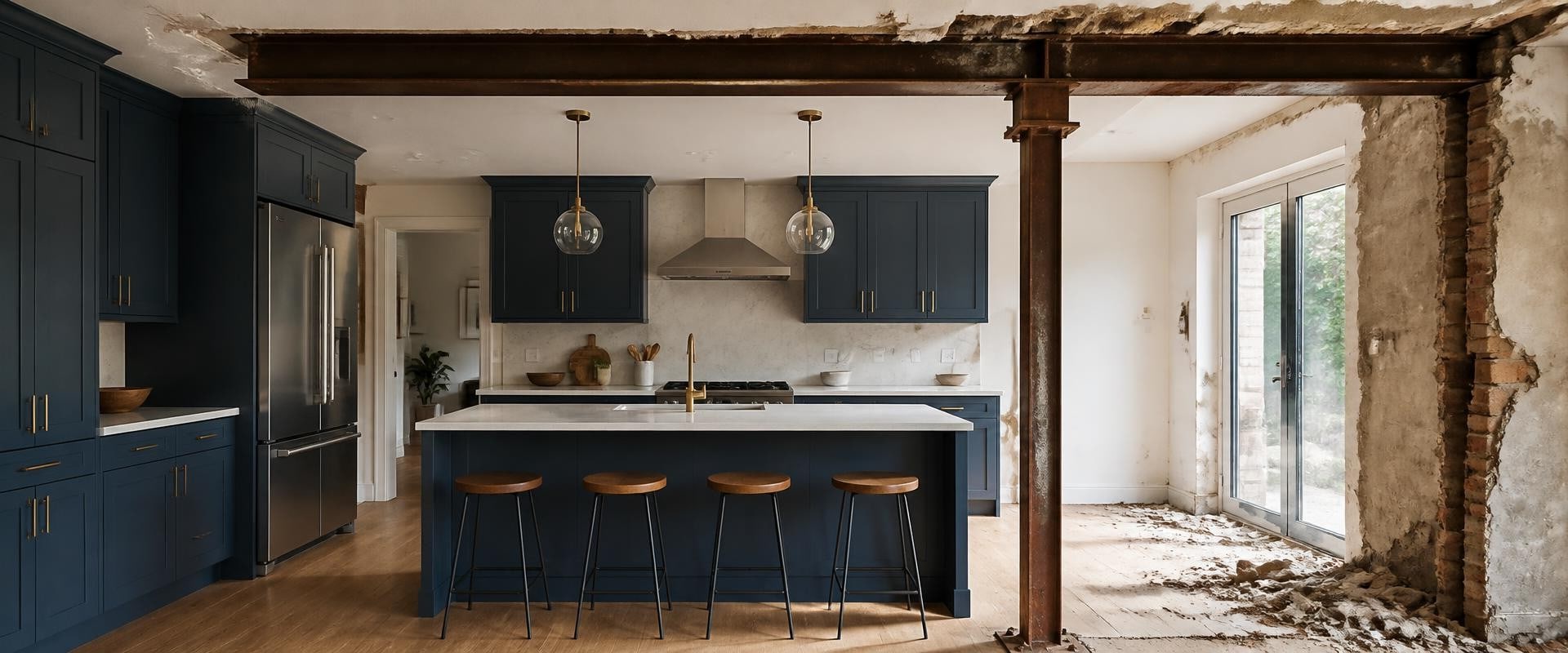
A kitchen relies on precise alignment for cabinets, countertops, flooring, appliances, plumbing, and other finishes to function properly. When a home experiences structural movement, even small changes can affect how these elements fit together. Foundation settlement or shifting may cause floors to slope, walls to move slightly out of square, or openings to become misaligned. These changes can create noticeable problems throughout a kitchen and may lead to repeated repairs if the underlying structural issue is not addressed before remodeling or refinishing work begins.
Cabinets Can Become Misaligned
Kitchen cabinets are typically installed level and securely attached to walls. Structural movement can change the position of those walls or the floor beneath the cabinetry. Over time, cabinet doors may stop closing evenly, drawers may begin sticking, or gaps can appear between cabinets and surrounding surfaces. Upper cabinets may also pull slightly away from walls if framing shifts. If these symptoms occur alongside wall cracks or uneven flooring, professionals such as Bats Foundation Repair San Antonio may be able to evaluate whether foundation movement is contributing to the changes.
Countertops May Crack or Separate
Countertops depend on stable cabinetry and level support. Materials such as granite, quartz, or other stone products can be particularly sensitive to movement because they are rigid and relatively heavy. If cabinets shift because of changes in the structure, countertop seams may separate or cracks may develop in vulnerable areas. Backsplashes can also pull away from countertops or develop cracked grout lines. Addressing structural concerns before replacing damaged countertops can reduce the risk of the same problems returning after new materials are installed.
Flooring Can Become Uneven
Structural movement may also affect kitchen flooring. Tile can crack, hardwood boards may separate, and laminate or vinyl flooring can develop gaps or raised sections. In some cases, the floor may begin sloping enough that appliances or furniture no longer sit level. These problems can result from foundation movement, subfloor damage, moisture, or installation issues, so determining the cause is important before replacing flooring. Installing new materials over an unstable or uneven surface may only provide a temporary improvement.
Appliances May Shift Out of Position
Major kitchen appliances often depend on a level floor and accurately aligned cabinetry. A refrigerator or range may begin leaning slightly if the floor settles unevenly, while a dishwasher can become difficult to fit properly beneath a countertop. Built-in appliances may also develop uneven gaps around their openings. Structural changes can place additional stress on plumbing, electrical, or gas connections attached to these appliances, making professional inspection important when significant movement occurs.
Plumbing Connections Can Experience Stress
Kitchen sinks, dishwashers, refrigerators, and other fixtures may have water supply and drainage lines running through walls or floors. Structural movement can place tension on these connections or alter the slope of drain lines. Leaks that develop beneath cabinets or flooring can create additional moisture problems, potentially worsening structural conditions. Plumbing systems should be checked when foundation repair or major structural adjustment is planned.
Plan Renovations After Structural Stabilization
Homeowners planning a kitchen renovation should evaluate structural concerns before investing in cabinets, countertops, flooring, and custom finishes. Foundation repairs may involve lifting or stabilizing sections of the home, which can slightly change wall and floor alignment. Completing necessary structural work first allows contractors to take more accurate measurements and install finishes based on the stabilized condition of the space.
Protect the Kitchen With Proper Repair Sequencing
Structural movement can affect nearly every major element of a kitchen, from cabinet alignment to flooring and plumbing. Rather than repeatedly correcting visible damage, homeowners can benefit from identifying whether foundation movement is contributing to the problem. Coordinating structural repairs with kitchen renovation work can reduce unnecessary rework, protect new finishes, and create a more stable foundation for a functional and attractive kitchen.